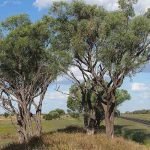
Over 1,200 trees and shrubs come under the genus Acacia. It comes from the pea family (Fabaceae) and grows in Australia and North Africa, and sometimes in Asia and Africa. Other names of acacia include wattle and Asian walnut.
In this post, we look at the various aspects and uses of this versatile type of wood. First, we discuss the types of acacia wood and their uses. Here, you can get more acquainted with acacia wood, how to identify it, and make the best use of this wood that enjoys so much popularity among woodworkers.
Background

Acacia is an ancient plant, and scientists have recovered fossils of certain acacia species dating back to 20 million years ago. The name “wattle,” which means “to weave,” traces its origins to 700 CE when baskets, fences, and roofs were made of acacia.
You can identify acacia trees by the wide and open modulating grains and unique knots. In addition, acacia is a durable species that exhibits considerable resistance to water, mold, and fire, making it a suitable choice for various indoor and outdoor applications.
Uses of Acacia

Acacia wood is attractive and durable, making it a popular choice for furniture, flooring, and other wooden items and structures. Estimates put acacia at 23% harder than oak, proving it an extremely strong wood type.
Every part of the acacia tree is useful. For example, the pharmaceuticals industry uses acacia leaves as ingredients for antihypertensive, anti-inflammatory, and antidiabetic drugs, analgesics, anti-bacterial, and even cancer drugs.
The bark also has medicinal and nutritional properties. In addition, the tree produces edible gum, which is used in the confectionery industry.
Interesting fact: Acacia gum is one of the main ingredients for making M&Ms, marshmallows, and gumdrops.
Types of Acacia Wood
Now that we have seen the versatility of acacia, let’s get into the different types of acacia wood and their uses:
Hawaiian Koa (Acacia koa)

Hawaiian koa, or simply koa as the name suggests, comes from Hawaii. The trees are tall, growing up to heights of 100 feet with tree trunks of diameters up to 5 feet.
It is one of the most sought-after and expensive types of acacia wood. It is reddish-brown to amber with some gold tones that make it extremely attractive. The wood grain has a broad-grained wavy pattern.
The wavy woodgrain pattern makes acacia difficult to cut. But it is durable, attractive, and very hard, with a Janka hardness rating of 1,790 lbf. It makes good furniture, surfboards, canoes, and also musical instruments, particularly ukuleles.
Australian Blackwood (Acacia melanoxylon)

We also call this wood Tasmanian blackwood and acacia blackwood. Australian blackwood is Native to Tasmania and eastern Australia; also later introduced to Africa, South America, and southern Asia. The trees grow to heights of 100 feet and trunks of up to 3 feet in diameter.
Australian blackwood serves as a cheaper alternative to Hawaiian Koa. Yet, paradoxically, it is not a dark wood with varied colors that range from medium-gold to reddish-brown.
It is a reasonably hard wood at a Janka hardness rating of 1,160 lbf. Australian blackwood resists decay but not insect attack. It turns, stains, finishes and glues adequately. The wood makes furniture, cabinets, gun stocks, and veneers.
Raspberry Jam (Acacia acuminata)
Also called jam wattle, here’s a wood that has a unique name. Raspberry jam trees are native to southern Australia, but also in most other parts as well. The trees are short and only grow up to 23 feet with tree trunk diameters of up to 1 foot.
Interesting fact: This wood gets its name from the unusual odor of raspberry jam that it emits when freshly cut.
The wood is dark, reddish-brown with light-yellow sapwood. It has a fine, uniform texture with a good natural luster. Raspberry jam is an extremely hard type of wood with a Janka hardness rating of 3,100 lbf.
Its extreme hardness makes raspberry jam a difficult wood to work with, but once done, and it produces satisfactory results. Raspberry jam makes good indoor and outdoor furniture, fence posts, shades, and turned objects due to its resistance to rot and insects.
Earpod wattle (Acacia auriculiformis)

Also known as auri, earleaf acacia, and northern black wattle, earpod wattle grows in Australia, Papua New Guinea, and Indonesia. The trees grow to a height of 95 feet. The tree gets its name from the ear-shaped pods it bears.
Earpod wattle is dark brown with a straight and fine grain. The wood isn’t very hard, with a Janka hardness rating of 1,710 lbf. But earpod wattle is not very attractive, so woodworkers don’t favor it much.
However, the wood finishes well, and woodworkers use it to make chess pieces, carrom coins, and tool handles, with limited use for furniture-making. Earpod wattle also plays an important role in the pulpwood industry.
Mangium

Other names for mangium include black wattle and hickory wattle. You will find these trees growing in Australia and Papua New Guinea. They are tall trees with heights up to 100 feet, and a tree trunk diameter of 2 feet.
Mangium has a shimmering brownish-yellow heartwood with a close grain pattern and a medium texture. We also call it hickory wattle because its color resembles that of hickory.
With a Janka hardness rating of 1,000 lbf. mangium is a moderately hard variety of wood suitable for home improvement projects. It also makes good doors, windows furniture, and flooring, particularly parquet flooring.
Cootamundra Wattle (Acacia baileyana)

Although Cootamundra wattle is native to Australia, you can also find it in parts of Africa and the southwestern United States today. Also known as Bailey’s acacia, the trees are not very tall and grow up to 30 feet.
Cootamundra wattle is cultivated more for ornamental purposes rather than the wood it yields. The trees are renowned for their beautiful yellow flower.
This wood has a light pink heartwood with a slightly lighter sapwood. The wood has a uniform texture with an interlocked grain structure. Unfortunately, the wood is neither durable nor resistant to insects.
Although the Cootamundra wattle is fairly hard with a Janka hardness rating of 1,710 lbf, it is not used much for wood. The tree is an invasive species, so it is mostly cut down for other cultivation.
Australian aborigines used to build shields, spears, and different weapons and tools using this wood. They also extracted tannins from the bark of the Cootamundra tree for various manufacturing processes.
Gidgee (Acacia cambagei)

Gidgee, purple gidgee, or stinking wattle is native to Australia, and the trees are not very tall at a maximum of 40 feet with tree trunks of a maximum diameter of 1 foot.
This wood is medium to dark reddish-brown with dark chocolate brown streaks. The sapwood is lighter and creates a stark contrast against the heartwood. The wood has a close-grained pattern, frequently interlocked wand with an occasional curly figuring called “ringed gidgee.”
Gidgee is extremely hard with a Janka hardness rating of 4,270 lbf. It shows good resistance to insects, decay, and moisture, making it suitable for outdoor applications like fence posts. It also burns well, so it makes good fuel.
Waddywood (Acacia peuce)

Waddywood or waddi grows in central Australia. The trees grow up to 60 feet, and the tree trunks grow to about 1 foot in diameter. This wood gets its name from the “waddies” or clubs that aborigines make out of this wood.
Waddywood is purplish brown with dark, almost black stripes. It resembles walnut wood, and the sapwood is light yellow.
The wood has a straight grain, with a uniform, medium texture. It is extremely hard with a Janka hardness rating of 4,630 lbf.
Because it is so hard, waddywood is difficult to work with, but it makes good fence posts due to its resistance to decay. Also, this wood is good for carving and turning.
Silver Wattle (Acacia dealbata)

Other names for silver wattle are black wattle, blue wattle, and mimosa. It grows in eastern Australia and Tasmania. The trees grow tall up to 100 feet.
The wood of silver wattle is golden-brown with a pinkish tint. The wood grain exhibits some striking patterns like tiger stripes and bird’s eye. It is of medium density, so easy to work with.
Silver wattle is an alternative to blackwood, and the wood is flexible, glues, and finishes well. The wood takes on a lustrous finish on polishing. It is good for interior applications for decorative furniture and art pieces. It also makes good flooring.
Umbrella Thorn Acacia (Acacia tortilis)

You will find umbrella thorn acacia growing in the Savanna, Somalia, and Sudan. The trees grow up to 69 feet, and another scientific name for it is Vachellia tortilis, and the tree gets its name from the way it grows, forming an umbrella-shaped canopy.
Legend has it that this wood was used to create the Ark of the Covenant in Biblical times. It was the obvious choice due to its extreme durability. Umbrella thorn acacia is also believed to have been used by the Israelites in the Old Testament to build the Tabernacles and the furniture within.
The wood makes indoor furniture, wagon wheels, cages, pens, fences, and also serves as firewood and makes charcoal.
Formosan Koa (Acacia confuse)

Also known as small leaf acacia, acacia petit feuille, small Philippine acacia, and Formosan acacia, Formosan koa grows in Southeast Asia and the Pacific Islands. The trees grow to a height of 49 feet.
This wood used to enjoy wide popularity in supporting beams for underground mines due to its high density and durability. It is moderately hard with a Janka hardness rating of 1,.460 lbf.
Formosa koa has a heartwood color of either chocolate-brown or rusty red and a distinctly different sapwood color ranging from off-white to golden yellow. It is harder than both oak and maple.
Due to its hardness, woodworkers tend to avoid it, but Formosan koa makes good musical instruments, bathtubs, and flooring due to its high water resistance.
Conclusion
We are sure you would have been aware of Acacia but did you know that there are so many types of acacia wood? Now that you have seen the wide variety that you can select from, we are sure that you can try out something in acacia for your next woodworking project!
Happy Woodworking!