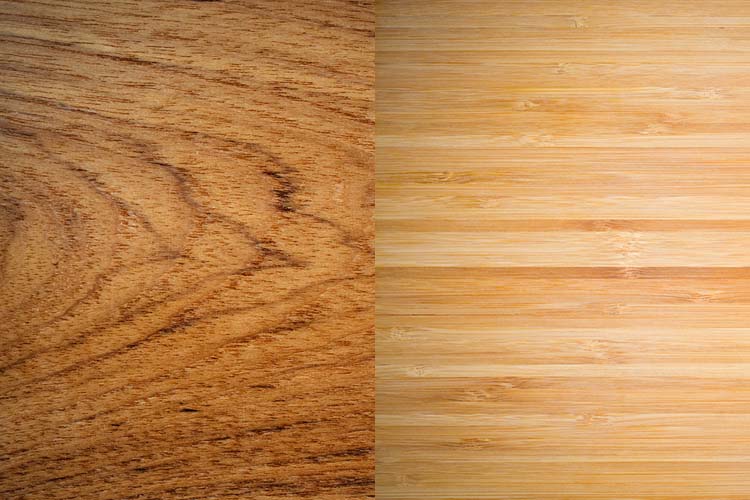
There are many attractive and strong types of wood that you may come across as a woodworker. Two of the finest types of wood are teak and olive. While teak is a more commercial type of wood, we use olive wood for ornamental purposes and kitchenware.
Teak vs. Olive is an interesting comparison. The common factors between these two fine wood species are good looks and strength. Due to these reasons, they make a variety of interesting wooden items. As a woodworker, you would do well to know a bit about teak and olive wood, to add variety to your woodworking projects.
Teak vs Olive
In this post, we take a close look at two fine types of wood – teak, and olive. These woods are not related to each other in any particular way. Yet, they share some similar characteristics. It is worthwhile to know the common factors and differences between both types of wood.

Teak (Tectona grandis) is a tropical wood species that grows primarily in the Indian subcontinent, Indonesia, and Myanmar. (Olive Olea spp. (Olea europaea, O. capensis)) grows in Mediterranean countries and Africa.
While teak is only known for the lumber it yields, olive trees are valued for the olive fruit they bear and the oil that we extract from olives. The olive tree is known more for its olive oil but it also produces some fine quality lumber, a lesser-known fact about this tree.
Teak: Background

Teak, also known as Tectona Grandis is a tropical wood species. It grows in the Indian subcontinent, Myanmar, Indonesia, and parts of Africa. The trees grow up to 130 feet with tree trunk diameters of up to 5 feet.
The history of the usage of teak goes back to the 7th century when rich people used it in their houses. Later, the Dutch started to use teak, especially when they were colonizing Indonesia. They used teak primarily for making boats and ships. They also used it for construction purposes.
The main reasons for teak’s extreme popularity were its extreme durability and good looks, but it was the same reasons that led to its downfall. Over the years, humankind harvested this wood relentlessly, leading to its near extinction.
Later, governments of a few teak-producing countries started to put a check on this exploitation. It led to a better future for teak being cultivated on plantations. The trading became extremely controlled.
Today teak is not as endangered as it was a few decades ago, but it is still in short supply and is an extremely expensive type of wood.
Olive: Background
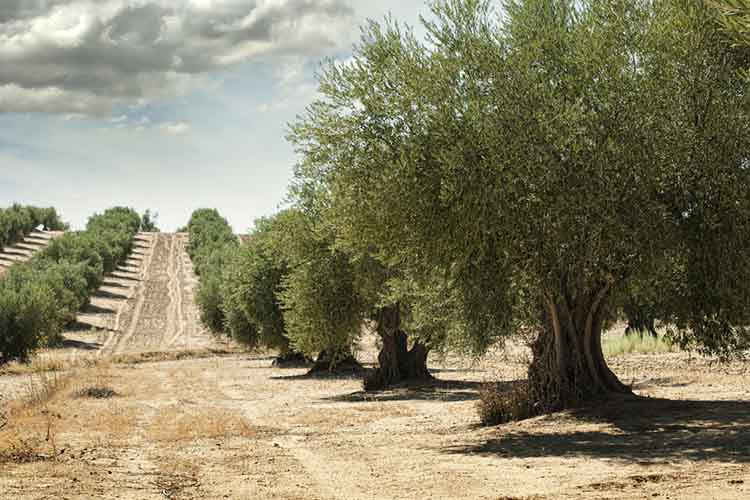
The olive tree is a gnarly, many-branched, twisty, and short tree. The trees grow up to a maximum height of 25 feet with tree trunk diameters of between 2 feet to 4 feet. These trees are known for their longevity, with a lifespan of up to 1,500 years!
We all know olive trees for the fruit that they bear and the oil that we extract from olives. But over the years, olive lumber has become a darling in the woodworking community, especially for making carved and turned objects.
Olive wood is extremely hard, dense, and heavy. Although it doesn’t resist insects very well, it exhibits striking grain patterns and is well-known for the fine kitchenware items that it makes.
Teak vs Olive: Appearance
Teak has medium-brown to golden-brown heartwood. It becomes dark as it ages. You will see mostly straight grain patterns in teak with occasional wavy patterns. The surface of teak wood is coarse and uneven and it feels oily to the touch.
Olive wood ranges from yellow to tan, accentuated with dark brown streaks. The darker heartwood is distinct from pale, cream-colored sapwood. Due to the twisted growth pattern of this wood, you will not find any straight grain patterns.

Cutting olive wood is as much a challenge as working it. The final appearance of the finished wood depends a lot on the way you cut it. The specialty of olive wood is that it is food safe and exhibits amazing woodgrain patterns. You also don’t get large sections of olive wood, it makes small turned objects, bowls, spoons, and such types of kitchenware.
Teak vs Olive: Durability
Teak is extremely hard and strong. It has excellent weather-resistant characteristics. It produces a high degree of natural oil, that serves to repel pests. All these characteristics make teak a suitable outdoor wood.
But due to its good looks, we use teak for indoor furniture, panels, flooring, and trim. Wherever you locate teak items, you will get the best out of them if you apply a suitable finish. By applying a finish like a varnish or paint in combination with a wood sealer, your teak wood will last a lifetime.
Olive wood is moderately durable wood and is prone to attack by termites. But it can withstand fungi to some extent. The strong point of olive wood is its extreme hardness and strength.
Olive would make great furniture if it came in larger sections. But because of the small sizes that it comes in, the applications are restricted to small turned objects, carvings, and kitchenware.
Teak vs Olive: Maintenance
On its own, the teak can survive well. But if you perform some basic maintenance operations on teak, you can enhance its life considerably. Teak needs to be cleaned regularly. Every so often, after cleaning and drying the wood, you can re-apply a wood finish, oil it, or paint it. This is the basic maintenance you need to do for teak.
If you don’t apply a finish, teak still retains its luster. But if maintained properly, it can last a lifetime. There are many ways and means of maintaining teak. It would be best if you cleaned it regularly, and for finishing it, you can either apply oil, varnish or paint upon primer.
With olive wood, care and maintenance are a bit more critical, because we mostly use it for kitchenware. To maintain kitchenware made from olive wood, you mostly need to oil it.
You can use food-grade mineral oil. Vegetable oil is best avoided because it tends to go rancid. It is a good practice to use oil to season new utensils. The trick is to rub the oil into the wood until it doesn’t absorb any more.
After rubbing oil into the wood, leave it to dry. You can add multiple coats, especially for more porous varieties of wood. You need to also follow some best practices like using warm water and mild detergent to clean your olive wood utensils.
Wipe them down with a dry towel after washing. Do not soak olive wood kitchenware in water for prolonged periods and never wash it in a dishwasher.
Teak vs Olive: Workability and Uses

Teak is an extremely workable wood. The only issue you may face while working teak is the high content of silica. It can soon make your cutting blades blunt. When you work with teak, you may find that you have to sharpen your tools more than usual.
You will find it easy to apply glues and finishes to teak. However, the oily texture of the wood might compel you to pretreat the wood with some liquid solvent before adding a finish or glue.
But teak is good for outdoor wood. It makes great indoor and outdoor furniture, and we also use it to make cabinets and flooring. Teak is an ideal wood for outdoor structures like railings and decks. Another widely-used application for teak is to build boats and ships.
Olive wood is another easy-to-work-with wood. But you have to be mindful of the highly-interlocked grain that can cause tearout while cutting and planing the wood. Although not very dimensionally stable, olive wood is well-known for producing gorgeous turned and carved objects. It also takes finishes and glues quite well.
Olive wood has limited uses due to the small lumber sizes and twisted timber. It has played a prominent role in making kitchenware since ancient times. Even today you can find some beautiful specimens of carved and turned objects like spoons, bowls, boxes, and inlays made from olive wood. It also makes excellent but highly-priced flooring.
Teak vs Olive: Price
Because teak is so scarce, but high in demand, it is an extremely expensive type of wood, when it is available. It is among the most highly-priced large lumber that you can find.
Olive wood is scarce for an entirely different reason. The fruit of the olive tree is in high demand, preventing cultivators from felling trees that frequently. The result is that the lumber is scarce and restricted to pruned branches and damaged parts of tree trunks. It pushes up the price considerably.
Teak vs Olive: Sustainability
Teak has a long history of over-exploitation and today, although it doesn’t feature on the endangered wood species lists, it continues to be an elusive type of wood. It is highly controlled, so you would do well to ensure that you procure it from a legal source.
Olive wood however has none of the sustainability issues of teak. Although this wood is also scarce, it is so due to different reasons as we have mentioned above. It is not listed on any of the lists of endangered wood species.
Teak vs Olive: Comparison Table
|
Parameter |
Teak |
Olive |
| Botanical name | Tectona grandis | Olea spp. (Olea europaea, O. capensis) |
| Color | Golden to medium brown | Cream or yellowish-brown |
| Durability | Highly durable | Moderately durable |
| Hardness (Janka Scale) | 1,070 lbf. to 2,330 lbf. | 2,700 lbf. |
| Strength | Extremely strong | Extremely strong |
| Maintenance | Easy to maintain | Easy to maintain |
| Price | Expensive | Moderately priced |
| Suitability for outdoors | Yes | No |
| Suitability for wood carving | Yes | Extremely suitable for carving |
| Workability | Easy to work with | Turns well but is prone to tearout |
| Smell | Leathery smell | Distinct fruity smell |
| Availability | Limited availability | Limited availability |
| Special features if any | No special features | Ideal for kitchenware |
Conclusion
In our discussion of teak vs. olive wood, we hope that you now have a clearer picture of these two fine types of wood. Although they are different in many ways, they enjoy some common features that make them preferred in several woodworking projects.
The choice is clear. If you have larger projects and structures to make, you can look for some fine teak (but ensure to buy legally-produced lumber!) If you want to create some small turned and carved objects, particularly kitchenware, olive wood can be an excellent choice. Use either of these types of wood for your next woodworking project and expect some great results.


