
The wood grain of mahogany is close and evenly colored. It can have some darker streaks with purplish shades. Cherry and mahogany can look similar to the uninitiated but there are some subtle differences in texture, growth pattern, and color that differentiate one from the other. The way the grain pattern looks depends on how the wood is cut and mahogany can be stained to look like cherry so it’s useful to know the difference between the two kinds of wood.
Mahogany vs cherry is a topic commonly discussed among woodworkers. Cherry, native to the United States is pale when cut but takes on a deep reddish-brown over time. Mahogany on the other hand is a tropical hardwood with a straight, fine grain. You can use either cherry or Mahogany for satisfactory results in a woodworking project.
Mahogany vs Cherry

With mahogany and cherry, you have two different hardwoods that are similar in appearance. Mahogany is a tropical hardwood whereas cherry grows in the United States. So, one of the reasons why mahogany tends to be more expensive is that most of the mahogany in the United States is imported.
Cherrywood on the other hand is locally sourced but there can be some extremely high-end varieties of cherrywood that cost more than some types of mahogany. Mahogany’s smooth fine grain and pinkish coloring which darkens over time are much sought-after in woodworking circles.
Moreover, mahogany is easy to work with for cutting, sanding, and turning on a wood lathe. It is also strong and durable.
The most prized species of mahogany is Honduran mahogany (Swietenia macrophylla)which is native to Mexico, central South America, and parts of Africa and Asia. The trees are very tall and grow up to heights of 200 feet with tree trunks of up to 6 feet in diameter.
Cherry trees on the other hand are smaller. They will grow up to 100 feet and the tree trunks can reach diameters of 5 feet. Whereas we use mahogany to make musical instruments like acoustic and electric guitars, and even piano parts, we use cherrywood for making furniture, wooden paneling, and flooring.
Mahogany: Background

Mahogany is something of a novelty because of its difficult availability. Particularly Honduran mahogany has been overharvested to the extent that it became an endangered species. Today, the trading and use of Honduran mahogany are almost banned. It is listed as an endangered wood species.
You would probably get mahogany in veneer form. There are many substitutes for mahogany that you might consider if you want to go for a sustainable option.
Mahogany furniture, cabinets, turned objects, musical instruments and carvings are all very prized items.
Cherry: Background

With cherry, you have not exactly an exotic but a very fine-looking wood. Cherry’s deep reddish-brown color is sought after by woodworkers and furniture makers alike. But you want to be careful about how this wood becomes dark because uncontrolled exposure to sunlight can result in unequal darkening of the wood.
Cherry makes excellent cabinets and fine furniture. It is a slightly softer kind of wood than many other hardwoods, even maple. Therefore, you need to be mindful of placing cherry furniture in high-traffic areas.
Cherry stains well and you can even finish it with oil and it will look good. Because there is such a distinct demarcation between sapwood and hardwood, some woodworkers use it to highlight the contrast. It can create a striking appearance.
Mahogany vs Cherry: Appearance
As we mentioned earlier, mahogany and cherry resemble each other in terms of appearance. They are both reddish but mahogany leans more on the orange and pinkish tints with brown streaks. The cherry on the other hand tends to be reddish.
Cherrywood is particularly photo-reactive, therefore, even a few days exposed to direct sunlight can make it darken considerably. Mahogany on the other hand will take longer to darken but you still need to keep mahogany furniture away from direct sunlight for too long.
The main difference between mahogany and cherry is that mahogany has a coarse grain whereas cherry has a smoother grain.
Mahogany vs Cherry: Durability
Mahogany and cherry both have a high degree of rot resistance. It can last from 20 years to over 40 years. Although both kinds of wood are resistant to rot, they don’t have much resistance to insect attacks. Therefore, both are suitable for indoor applications.
The durability of mahogany and cherry depends largely on how you maintain them. If maintained well, they can last for decades. Therefore, by painting or polishing these woods you can add a protective layer from the harmful UV (ultraviolet) rays of the sun.
Mahogany vs Cherry: Maintenance
Because of cherry’s susceptibility to sunlight, you need to take extra care to keep cherrywood flooring or furniture away from direct sunlight for prolonged periods. That way, you can prevent uneven darkening.
However, in retrospect, both mahogany and cherry are easy woods to maintain. But you need to maintain them regularly for the long life of the wood.
Washing and wiping mahogany regularly is recommended for both furniture and flooring. It tends to get discolored but you can restore its original color by cleaning it. If you reapply the finish annually you can significantly enhance the life of mahogany.
Mahogany vs Cherry: Workability and Uses

You will find that you can work easily with mahogany. It takes nails and screws easily and this wood is also good with both hand and machine tools. We make musical instruments, cabinets, furniture, boats, and carved and turned objects with Mahogany.
Cherry is an easy wood to work with. You can easily drive nails and screws into it and apply glue to it. If you tend to work with your hands more, you will find cherry is a good wood for turning or sculpting. It is much easier to work with than many other types of hardwood.
Cherry is good for interior millwork, cabinetry, furniture making, wall paneling, veneer, turned objects, and specialty wood articles.

Mahogany vs Cherry: Price
Both mahogany and cherry are rather expensive. Mahogany costs considerably more than cherry if you can get it. It is scarce due to its being an endangered species, particularly Honduran mahogany.
You can get unfinished cherry at a rather cheaper rate but finished cherry will cost perhaps 20% to 30% more. Although mahogany can be expensive, there are some cheaper varieties of the wood like Philippine mahogany which can be considerably cheaper than Honduran. But this is not generally considered true mahogany. In fact, it is a loose term that applies to several different wood species that come from Southeast Asia.
But the long and the short of it is that if you choose to use either mahogany or cherry then you should be ready to pay a bit more.
Mahogany vs Cherry: Sustainability
Over the years, due to overlogging, mahogany trees became scarce. Most mahogany species have found their way onto the CITES listings as being endangered. Although some wood is available that is highly expensive.
Cherrywood on the other hand does not feature on any of the lists of endangered wood species.
Mahogany vs Cherry: Any other characteristics
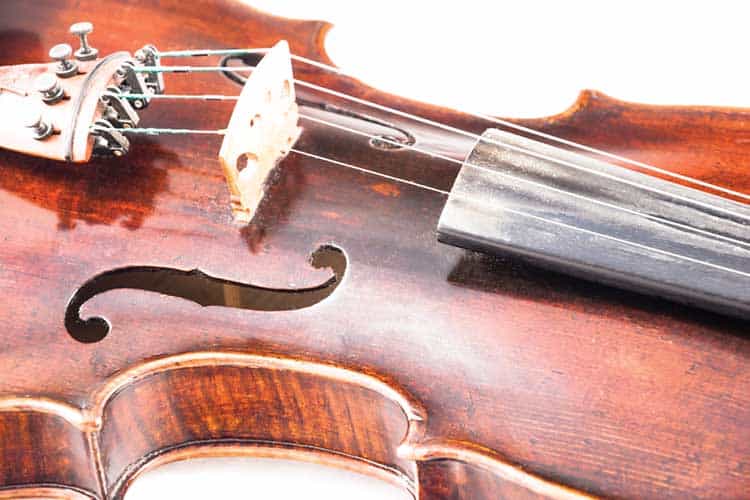
Mahogany has the unique feature of being an excellent tonewood for musical instruments. It also exhibits a unique phenomenon called “chatoyancy” which alludes to the color-changing characteristics of the wood. When light falls on the wood surface at a particular angle, the color changes to a pale, pearly shade.
Cherry’s non-woodworking unique feature is that it is an excellent wood for smoking meats and other foodstuffs.
Mahogany vs Cherry: Comparison Table
|
Parameter |
Mahogany |
Cherry |
| Botanical name | Swietenia macrophylla | Prunus serotina |
| Color | Reddish-brown to blood red | Coppery to reddish-brown |
| Durability | Fairly Durable | Moderately durable |
| Hardness (Janka Scale) | 800 lbf. – 3,840 lbf. | 950 lbf. |
| Strength | Medium strength | Moderately strong |
| Maintenance | Low Maintenance | Easy to maintain |
| Price | Expensive to highly expensive | Expensive |
| Suitability for outdoors | For Indoor use only | Not suitable for outdoors |
| Suitability for wood carving | Yes | Yes |
| Workability | Easy to work with | Easy to work with |
| Smell | Woody, dry and clean smell | Mild scent while working |
| Availability | Can be difficult to procure | Easily available |
| Special features if any | Exhibits chatoyancy | Excellent for smoking meat |
Conclusion
Mahogany and cherry are forms of wood that present two great choices when it comes to woodworking projects. We hope that we have helped you to distinguish one wood from another so that you can select and use to wood to the best of your abilities.
Whether you are an advanced woodworker or a beginner, both of these are good woods to work on. Although mahogany can be expensive, you can find some cheaper options. If not, you can use cherry. But ultimately, any of your woodworking projects that use either mahogany or cherry is bound to give you satisfactory results.
Happy woodworking!


