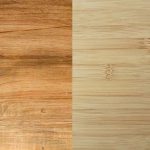
Bamboo is a type of wood that has become very popular in recent years. Technically, it is not even wood but grass. But it has gained popularity for various wood applications. It is a highly sustainable form of wood that grows rapidly. On the other hand, oak is a natural form of wood. The trees take decades to grow and you can find oak flooring that is centuries old!
Bamboo vs oak is a much-discussed topic amongst woodworkers, for different types of flooring and other wood applications. Bamboo is a unique plant with rapid and constant growth. Oak, however, takes a long time to grow which puts a limitation on the available lumber. Oak isn’t prohibitively expensive but it costs significantly more than bamboo.
Bamboo vs Oak
You can distinguish bamboo from oak by noting a few key points. Bamboo is much more eco-friendly than oak. It is considerably more durable in terms of hardness and resistance to water. However, bamboo is a much cheaper option than oak. We cannot say that oak is an incorrect choice. It has beautiful looks and is a safe and natural wood that you will find easy to install.
You will find bamboo flooring also easy to install. So, in retrospect, it depends on your personal preferences and budgetary considerations whether you use bamboo or oak. Both bamboo and oak bring several differences and similarities that are worthwhile for a woodworker to know to get the best out of these two types of wood.
Bamboo: Background

As we mentioned above, bamboo is technically not wood. But it has become very popular, particularly for flooring. It grows rapidly compared to oak which can take up to 100 years to grow! However, there are some downsides to using bamboo which we will touch upon later.
Bamboo primarily grows in China and other parts of Asia. Bamboo behaves like hardwood when is compressed into boards. It is strong, durable, and has adequate resistance to moisture and insects. It has a similar Janka rating to oak but generally speaking, we consider bamboo overall less durable than oak.
The process of manufacturing bamboo planks for flooring is quite elaborate. The bamboo is cut into strips which are then boiled in chemicals and bleached to remove starches and sugars. The resultant material is dried, laminated, stained, and cut into boards of requisite sizes.
Bamboo has a similar color to oak through a heating process called “carbonizing” which causes it to become darker. Although this darker color can be desirable, it is believed to soften the wood making it unfit for flooring.
The grain structure of bamboo planks can be vertical or horizontal depending on the way the wood is cut. The process of lamination is complicated and uses chemicals like urea, formaldehyde, and other volatile organic compounds (VOCs). You can get bamboo devoid of these chemicals if you want an eco-friendly flooring solution.
Oak: Background

Oak has a characteristically long growing time that restricts the availability of lumber. The lumber is typically more expensive than many other types of hardwood. It is strong, solid, dense, and versatile. It is used in several applications like heavy furniture, flooring, paneling, and so on.
Red oak grows in the northeast region of the United States and Southeastern Canada. Red oak trees are tall and grow up to 115 feet with tree trunk diameters of up to 6 feet.
Oak looks best if stained with a clear or semi-transparent lacquer which enhances the fine woodgrain pattern of the wood. You will seldom see painted oak. It is well-known for its fine-grain pattern. It exhibits a fair degree of durability in terms of moisture resistance. Due to this reason, we use oak to make wooden barrels, particularly whiskey barrels.
Bamboo vs Oak: Appearance
Bamboo gives you restricted choices because you get only three basic grain types:
Vertical Grain Bamboo
The bamboo is cut along the grain and the boards are glued together to impart a striped appearance to the boards.
Flat Grain
It is taken off flat layers of bamboo which are glued together to create boards.
Stranded Bamboo
This bamboo type is where the bamboo is stripped into individual fibers and then the bamboo is bound together to form boards. It imparts a variegated appearance. It is the hardest form of bamboo with a Janka hardness rating of up to 4,000 lbf.
There are many species to choose from with oak and a vast variety of types of wood concerning appearance and grain patterns. Then again if you deal with flooring, you have different grades depending on the quality, growing conditions of the trees, and type of processing. It all adds to a vast range of options.
Oak has light brown heartwood with a reddish hue. The sapwood is paler and you won’t always find a sharp differentiation between the sapwood and heartwood. The wood grain of oak is straight, coarse, and uneven with wide pores.
Bamboo vs Oak: Durability
Bamboo and oak are fairly durable types of wood. The Janka hardness ratings of both kinds of wood are similar, ranging between 1,400 lbf. and 1,200 lbf respectively (although some varieties of bamboo like stranded bamboo can reach a Janka hardness rating of 4,000 lbf.)
The hardness and high durability of both these types of wood make them an excellent choice for flooring and furniture. Bamboo particularly stands up against abrasions, scratches, scuffs, dents, and so on. It may have a considerably shorter life than oak.
Bamboo vs Oak: Maintenance
Bamboo floors need a little bit of care while cleaning and maintaining them. You should avoid wetting the floor. Dry mops are a good choice for cleaning them. Alternatively, you can use a damp mop but avoid saturating the surface in water.
You can use most cleaning agents on bamboo. It is comparatively easy to sand down and refinish bamboo flooring when it becomes a bit worn.
Oak flooring is also easy to maintain but you need to keep grit off the surface to avoid scratches and abrasion. Sweeping and wiping it down with a damp cloth or mop is usually sufficient. Like bamboo, oak can be sanded down and refinished when it gets a bit worn. You might have to replace a few damaged boards in the refurbishing process.
Bamboo vs Oak: Workability and Uses

Bamboo has a Janka hardness rating that ranges between 1,400 lbf. and 1,600 lbf. Typically, it can be a bit harder than oak flooring and is similar to the hardness of hard maple. Therefore, when it comes to workability you may find bamboo a bit tricky to cut, because of the bamboo fiber that tends to pull out while crosscutting. It can split in the wrong direction while straight cutting.
Another issue with bamboo is the high silica content which can also have a blunting effect on tool blades. You might find it necessary to use carbide blades. Surface sanding is the best way to level bamboo boards rather than planing or using steel cutters. Bamboo takes glue and stain well.
We use bamboo to make small carved items, window blinds, furniture, musical instruments (flutes, woodwinds, and chimes), scaffolding, ladders, fishing rods, flooring, veneer, paper, and small novelty items.
Oak is dimensionally stable meaning that it will not warp or crack easily. You can use machine and hand tools comfortably on this wood. One issue that you need to look out for with oak is that it reacts to iron. So, if there are any inserts in oak like screws, nails, brackets, and iron handles it can result in staining the wood permanently, particularly when wet.
Oak is good for steam bending and accepts glue well and takes stains and finishes quite well. So, you can make good flooring and furniture from oak.

A unique use of oak is for making whiskey barrels. Oak contains a high proportion of tannin, a substance that finds use in the tannery industry. There are some medicinal uses for oak like white oak and we use Japanese oak to make professional drums.
Bamboo vs Oak: Price
Bamboo comes in three forms by way of processing – hollow turning from giant bamboo, glued boards and sheets, and also in veneer form. It is a highly abundant source of wood and it is used widely and usually comes at a reasonable price. However, there are some grades of bamboo that can be even more expensive than many domestic hardwoods in the United States.
Because oak takes such a long time to grow workable lumber becomes a bit difficult to source. Being a heavy wood, transportation costs are high. These factors push up the price of oak which can be moderate to highly expensive, particularly for some imported species.
Bamboo vs Oak: Sustainability
With bamboo, you don’t need much fertilizer and pesticide to grow it. It grows very fast compared to most hardwood trees which can take decades to grow. Therefore, bamboo is much more sustainable than oak. Although bamboo is a highly sustainable source of lumber, neither white oak nor red oak finds a place on any of the lists of endangered wood species as well.
Bamboo vs Oak: Any other characteristics
With bamboo, there are no special characteristics. Oak, however, is well-known for the whiskey barrels that it produces. It also produces nuts called “acorns” which are edible for squirrels but usually not for human beings. Oak also finds use in the tannery industry for the tannin that it produces.
Bamboo vs Oak: Comparison Table
| Parameter | Bamboo | Oak |
| Botanical name | Phyllostachys and Bambusa genera | Quercus rubra |
| Color | Pale yellow | Light to medium brown with a reddish tint |
| Durability | Low durability | Highly durable |
| Hardness (Janka Scale) | 1,410 lbf. to 4,000 lbf. | 1,220 lbf. |
| Strength | Moderately strong | Extremely strong |
| Maintenance | Easy to maintain | Less maintenance than many other kinds of wood |
| Price | Moderate to expensive | Expensive to highly expensive |
| Suitability for outdoors | Not suitable for outdoors | Not suitable for outdoors |
| Suitability for wood carving | Suitable for wood carving | Suitable for wood carving |
| Workability | Easy to work with | Good |
| Smell | Unique, earthy smell while being worked | Characteristic odor |
| Availability | Easily available | Abundantly available |
| Special features if any | No special features | Used in the tannery and brewery industries |
Conclusion
Bamboo is a trendy source of wood for flooring and various types of light furniture. It is good for outdoor use for using on a covered deck or balcony. It is a durable wood and is also favored due to its high sustainability. But it may not last as long as many varieties of hardwood including oak.
But if you want to use either bamboo or oak flooring, you can get equally good results and some attractive designs. They are both versatile types of wood and either can add class to both modern and traditional homes. So, in your next woodworking project, you would do well to use either of these fine types of wood to create great results.
Happy woodworking!